Retrospective: GSH Retreat 2026
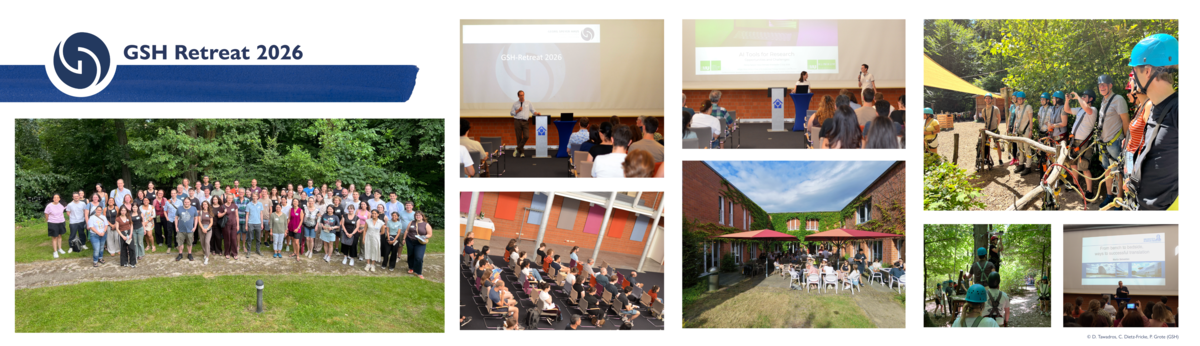
From 2 to 3 July 2026, members of the Georg-Speyer-Haus gathered at the Wilhelm-Kempf-Haus in Wiesbaden-Naurod for the biannual GSH retreat. This two-day event brought together researchers, clinicians, and invited experts to enjoy an inspiring program of scientific presentations, discussions, and networking. It provided an opportunity to take a break from daily routines and explore new perspectives in cancer research.
'Our aim was to create a retreat that inspires scientific curiosity, while also providing time and space for the kind of conversations that don't often happen in everyday lab life. These informal exchanges are often where new ideas and collaborations begin.' Christopher Dietz-Fricke (Member of the organizing committee)
The scientific program showcased the breadth of modern biomedical research, starting with innovative technologies and methodologies such as spectral flow cytometry, light-sheet microscopy, organ-on-chip systems, artificial intelligence, and advanced data visualization. These tools are increasingly shaping translational cancer research and enabling new insights into areas such as spatial immuno-oncology and tumour immunodynamics. Alongside these scientific advances, the program also addressed responsible animal research and reflected on Paul Ehrlich's pioneering contributions to experimental cancer research.
In addition to the lectures, the retreat provided ample opportunities for lively discussions and interdisciplinary exchange between colleagues from various research groups and partner institutions. Whether during coffee breaks, shared meals, or the team-building activity in the nearby climbing forest, participants took the opportunity to discuss new ideas, strengthen existing collaborations, and build new connections.
The Georg-Speyer-Haus would like to thank all the presenters, organisers and participants who made this year's retreat such a successful event. We would also like to thank our colleagues from the University Hospital Frankfurt, Goethe University Frankfurt, the Frankfurt Cancer Institute (FCI), the University of Lausanne, Miltenyi Biotec, the Max Planck Institute of Molecular Cell Biology and Genetics, the Ludwig Maximilian University of Munich, the University of Tübingen and the German Cancer Research Center (DKFZ). Their contributions enriched the scientific programme and highlighted the importance of interdisciplinary collaboration in advancing cancer research.
'One of the highlights of the retreat was seeing how naturally scientific exchange continued beyond the lecture hall, which was a great example of the collaborative and inclusive environment that the retreat fosters.' Ryan Mc Neill (Member of the organizing committee)
We look forward to continuing these collaborations and to welcoming everyone back for the next GSH Retreat in 2028!